
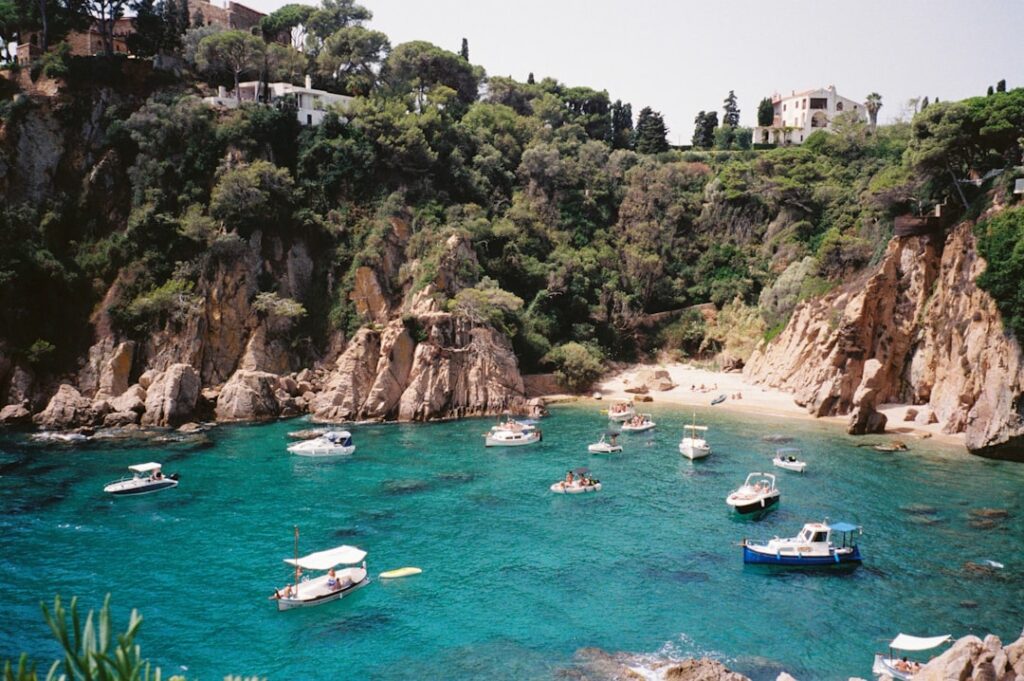
Spain‘s coastline stretches over 3,000 miles, and the Mediterranean shores between the Costa Brava and Costa del Sol offer some of Europe’s most diverse beach experiences. Forget the stereotypes—beyond the resort strips, you’ll find hidden coves, medieval fishing villages, and beaches that range from wild and windswept to perfectly manicured.
Costa Brava: Dramatic Cliffs and Crystalline Coves
The Costa Brava runs from Blanes to the French border, and its name—”wild coast”—tells you what to expect. The beaches here are smaller and rockier than their southern cousins, but the water is impossibly clear.
Start with Cala Sa Boadella near Lloret de Mar, a naturist-friendly beach backed by pine forests. The walk down takes fifteen minutes, which keeps the crowds manageable even in August. For something more accessible, Platja de Castell in Palamós sits in a protected bay with calm water perfect for families and a beachfront chiringuito serving grilled sardines.
The medieval town of Tossa de Mar offers Platja Gran, where you can swim in the shadow of 12th-century walls. Arrive before 10 a.m. to claim your spot, then spend the afternoon exploring the Vila Vella fortress above.
Don’t miss the Camí de Ronda, the coastal footpath connecting many Costa Brava beaches. The stretch from Calella de Palafrugell to Llafranc takes about 45 minutes and rewards you with views that justify every blister.
Costa Dorada: Golden Sands and Roman Ruins
South of Barcelona, the Costa Dorada trades cliffs for wide, golden beaches. Platja Llarga in Tarragona runs for nearly two miles and never feels crowded, even in peak summer. The northern end, near the mouth of the Francolí River, attracts windsurfers when the Tramontana blows.
After swimming, walk into Tarragona’s old quarter to see the Roman amphitheater overlooking the sea—it’s the only beach destination in Spain where you can combine ancient history with your sunbathing. The RENFE Cercanías train from Barcelona Sants takes just over an hour.
Sitges, 35 minutes from Barcelona, offers 17 beaches along its compact coastline. Platja de la Balmins sits just past the church of Sant Bartomeu i Santa Tecla and gives you that classic postcard view of whitewashed buildings tumbling toward turquoise water. The town’s liberal attitude and thriving arts scene make it worth an overnight stay.
Costa Blanca: White Towns and Warm Water
The Costa Blanca centers on Alicante and extends north to Denia and south to Murcia. The Mediterranean reaches its warmest temperatures here, and swimming season runs from May through October.
Skip overcrowded Benidorm and head to Granadella Beach near Jávea instead. This protected cove has pebbles rather than sand, but the snorkeling along the rocky edges reveals grouper, octopus, and the occasional moray eel. Arrive early or book parking online—the small lot fills by 11 a.m. in summer.
Altea, with its blue-domed church and cobblestone streets, offers Playa de la Roda, a long pebble beach with mountain views. The promenade has excellent seafood restaurants; try La Clarita for arroz a banda, rice cooked in fish stock that tastes like concentrated Mediterranean sunshine.
Costa del Sol: The Classic Andalusian Beach Experience
The Costa del Sol runs from Málaga to Gibraltar, and while parts have been developed within an inch of their lives, pockets of authentic Andalusia survive.
Nerja’s Playa de Maro sits inside a protected natural area where the Sierra de Almijara mountains meet the sea. The beach has coarse sand, dramatic rock formations, and a series of small waterfalls that create natural freshwater showers. The Balcón de Europa viewpoint in Nerja proper is worth the visit, but get there at sunrise to avoid the tour buses.
West of Málaga, Playa de la Misericordia remains refreshingly local. Málaga residents colonize this wide, dark-sand beach on summer weekends, setting up elaborate picnics of cold beer, boquerones fritos, and ensaladilla rusa. The chiringuitos here serve some of the coast’s best espetos—sardines grilled on bamboo skewers over driftwood fires.
For something completely different, drive to Bolonia Beach near Tarifa. This four-mile stretch of white sand sits beneath a massive Roman ruin (Baelo Claudia) and faces Morocco across the strait. The Levante wind can be fierce, making this paradise for kitesurfers and windsurfers. If you’re just swimming, aim for mornings when the wind is calmer.
Practical Tips for Spanish Beach-Going
Spaniards eat late and beach late. Arrive before 11 a.m. to claim the best spots and avoid the midday crush. Most beach bars don’t serve food until 1 p.m., so pack snacks if you’re arriving early.
Topless sunbathing is normal and unremarkable on Spanish beaches. Full nudity is legal on designated beaches and tolerated on remote coves. When in doubt, follow local practice.
Beach showers are for rinsing sand, not shampooing or soaping up. Many beaches now have foot-washing stations separate from full showers—use these to keep sand out of your car without monopolizing facilities.
The Mediterranean has no meaningful tides, but jellyfish (medusas) occasionally appear in summer. Purple flags indicate their presence. Most stings are painful but harmless; vinegar helps, though beach bars usually have specific remedies on hand.
Want more insider tips on Spain’s coasts, cities, and hidden corners? Subscribe to the Love Spain newsletter and get one short story delivered daily—the Spain you won’t find in guidebooks.