Valencia doesn’t always get the attention Barcelona and Madrid command, but Spain’s third-largest city rewards visitors with a unique blend of futuristic architecture, authentic culinary traditions, and a relaxed Mediterranean vibe. This is where paella was born, where a former riverbed became Europe’s most innovative urban park, and where Santiago Calatrava’s otherworldly structures have redefined the skyline.
The City of Arts and Sciences
The Ciudad de las Artes y las Ciencias is Valencia’s showpiece—a complex of six futuristic buildings designed by native son Santiago Calatrava along the old Turia riverbed. The white, skeletal structures look like something from a science fiction film, and they’ve become Spain’s most photographed modern architecture.
Start at the Hemisfèric, an IMAX cinema shaped like a giant eye that reflects in the surrounding pools. The Príncipe Felipe Science Museum next door resembles a whale skeleton and houses interactive exhibits that are surprisingly engaging even for non-Spanish speakers. The Oceanogràfic, Europe’s largest aquarium, features underwater tunnels and Arctic, Mediterranean, and tropical zones—plan at least three hours if you’re visiting with kids.
The complex is open year-round, but visit in late afternoon to catch the structures bathed in golden light, then stay as the blue LED illumination takes over after dark. The area between buildings is free to walk, making it perfect for photography even if you skip the paid attractions.
Paella in Its Birthplace
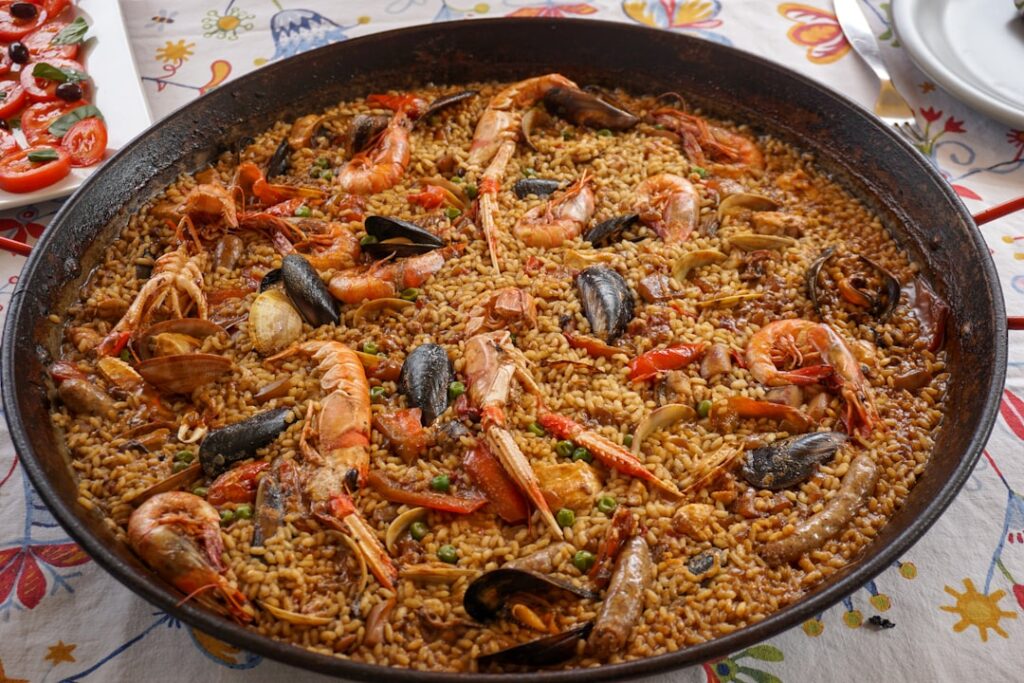
Forget the seafood paella tourist traps. Traditional Valencian paella is made with chicken, rabbit, and flat green beans, cooked over orange wood in massive pans. The dish was created in the countryside surrounding Valencia, and locals are fiercely protective of authenticity.
Head to La Pepica on Paseo Neptuno, right on Malvarrosa Beach. This 1898 institution has served everyone from Hemingway to the Spanish royal family, and their paella Valenciana is textbook perfect. Arrive by 1:30 p.m. or reserve ahead—paella is a lunch dish in Spain, and kitchens stop making it by mid-afternoon.
For a more local experience, take the bus to El Palmar, a village in the Albufera wetlands 10 kilometers south of the city. Restaurante Mateu is family-run and sources ingredients from the rice paddies visible from the dining room. Order the paella for two (it takes 20 minutes to prepare, as it should) and start with esgarradet, a salad of salt cod, red pepper, and garlic.
The Turia Gardens and the Old Town
When Valencia diverted the Turia River after devastating floods in 1957, the city transformed the nine-kilometer dry riverbed into a continuous park running from the City of Arts and Sciences all the way to Bioparc Valencia. It’s a brilliant example of urban planning—locals jog, cycle, and picnic in what could have been a highway.
Walk or rent a bike at the Jardín del Turia and head toward the historic center. You’ll pass playgrounds, football fields, and Gulliver Park, where kids climb over a giant sculpture of the literary character pinned to the ground.
The old town centers on Plaza de la Virgen and the Gothic Valencia Cathedral, which claims to house the actual Holy Grail (chapel admission €2). Climb the Miguelete bell tower for 360-degree views—207 steps, but worth every one. The adjacent Plaza de la Reina is lined with horchaterías serving horchata de chufa, a sweet tiger nut milk drink unique to Valencia, best paired with fartons (sweet glazed pastries for dunking).
Don’t miss the Mercado Central, a modernist iron-and-glass market hall from 1928. It’s one of Europe’s largest fresh food markets, with over 300 stalls. The Iberian ham vendors will slice samples, and the seafood displays are a photographer’s dream. Come in the morning for peak energy.
Practical Details
Valencia’s Joaquín Sorolla train station connects to Madrid (1 hour 40 minutes by high-speed AVE) and Barcelona (3 hours). The metro runs from the airport to the city center in 20 minutes. Within the city, walking and the bike-share system (Valenbisi) handle most needs—Valencia is flat and bike-friendly.
March is dominated by Las Fallas, the explosive spring festival with massive satirical sculptures burned on March 19. It’s spectacular but chaotic—book months ahead or avoid it if you prefer a calmer visit. May through October offers beach weather, while November through February sees fewer crowds and mild temperatures perfect for city exploring.
The city’s pace is slower than Barcelona or Madrid. Lunch runs 2 p.m. to 4 p.m., dinner starts around 9 p.m., and siesta closures are still common in smaller shops. Embrace it—Valencia rewards travelers who slow down.
Want more insider tips on Spain’s cities, hidden corners, and best-kept secrets? Subscribe to the Love Spain newsletter and get one short story a day delivered to your inbox.