
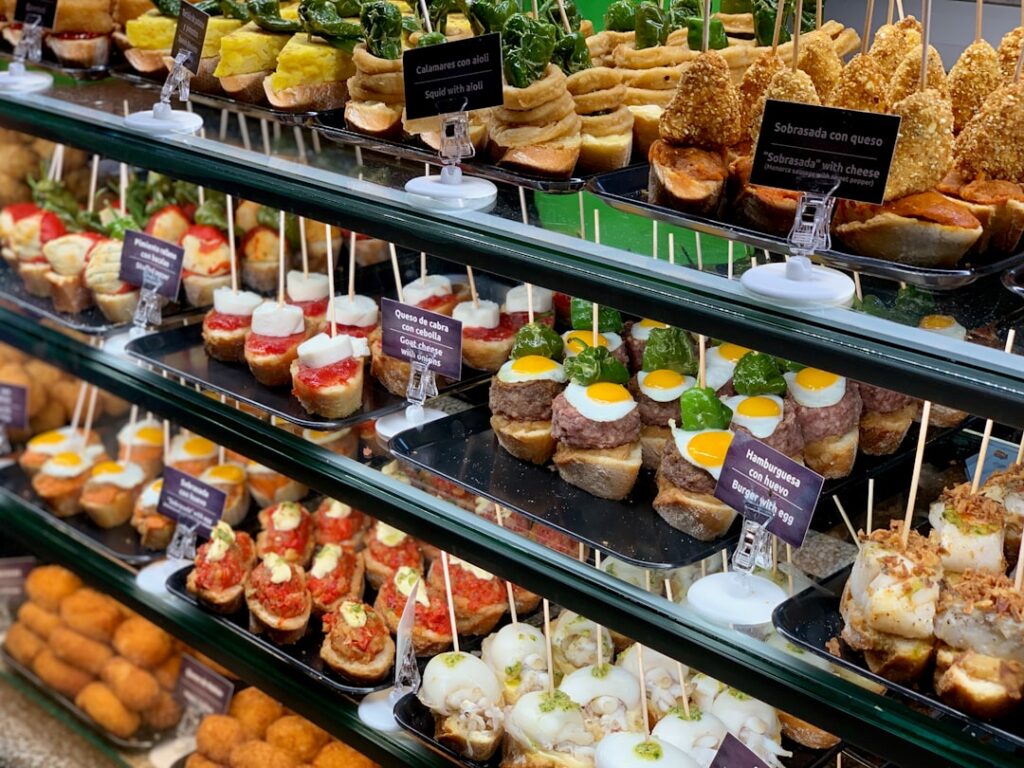
Tapas are more than just small plates—they’re a way of life in Spain. The ritual of hopping from bar to bar, standing at zinc counters with a small glass of wine or beer, nibbling on perfectly prepared morsels while catching up with friends, is as Spanish as flamenco or siesta. Understanding tapas culture means understanding Spain itself.
The beauty of tapas lies in their variety and accessibility. You might spend €3 on a plate of jamón ibérico at one bar, then move next door for grilled octopus or patatas bravas. No reservations, no commitment, just good food and better conversation.
What Makes a Tapa
The word “tapa” literally means “lid”—legend has it that bar owners once placed slices of bread or ham over wine glasses to keep flies out. Today, tapas range from simple olives and almonds to elaborate miniature creations worthy of a Michelin kitchen.
Classic tapas include gambas al ajillo (garlic shrimp), croquetas de jamón (ham croquettes), boquerones en vinagre (marinated anchovies), and pimientos de Padrón (small green peppers, most mild but occasionally spicy). In the Basque Country, they’re called pintxos and often come skewered with a toothpick on bread.
Each region has its specialties. Andalusia excels at fried fish and seafood. Madrid is famous for its cocido madrileño and callos (tripe). Galicia serves pulpo a la gallega (octopus with paprika). Understanding these regional differences makes tapas hopping an education in Spanish geography.
Madrid’s Classic Tapas Bars
Start at La Casa del Abuelo on Calle Victoria, steps from Sol. They’ve been serving sizzling gambas al ajillo and glasses of sweet red wine since 1906. The walls are tiled, the crowd multigenerational, and the shrimp arrive so hot you’ll burn your fingers.
Casa Labra, near the same area, has been frying cod croquettes since 1860. Order bacalao (salt cod) and a small beer at the standing bar—it’s cheaper than sitting down and more authentic. The croquettes are legendary: crispy outside, creamy within, perfectly seasoned.
In the La Latina neighborhood, Juana la Loca on Plaza de la Puerta de Moros serves inventive tapas alongside traditional ones. Their tortilla española is excellent, but don’t miss seasonal specials like wild mushrooms in autumn. The neighborhood itself is ideal for a Sunday afternoon tapas crawl after the Rastro flea market.
For vermouth hour (around noon or 7 PM), head to Bodega de la Ardosa on Calle Colón. Order a vermouth on tap and their famous salmorejo, a thick cold tomato soup from Córdoba that’s richer and more substantial than gazpacho.
Seville and Andalusian Tapas Culture
In Seville, many bars still offer free tapas with each drink—a tradition that’s fading in other cities. El Rinconcillo, Spain’s second-oldest bar (founded 1670), serves spinach with chickpeas, blood sausage, and excellent jamón while waiters chalk your bill directly on the wooden bar.
Cross the river to Triana, the traditional working-class and flamenco neighborhood. Bar Las Golondrinas on Calle Antillano Campos specializes in pescaíto frito (fried fish)—choose from a selection of small fish, all impeccably fresh and lightly battered. Pair it with manzanilla sherry, dry and slightly salty, perfect with seafood.
For modern Andalusian tapas, Eslava in the Arenal neighborhood offers creative small plates that respect tradition while pushing boundaries. Reservations recommended for the dining room, but the bar is first-come, first-served.
Barcelona and Beyond
Barcelona’s tapas scene mixes Catalan tradition with global influences. Quimet & Quimet in Poble Sec is a standing-room-only bodega where the owner assembles spectacular montaditos (small open sandwiches) behind the bar. Their smoked fish, caviar, and vermouth selection is remarkable for such a tiny space.
Cal Pep, near the Picasso Museum in El Born, draws crowds for incredibly fresh seafood. Sit at the bar if possible and let Pep guide your choices—the clams, grilled prawns, and chickpeas with blood sausage never disappoint.
In San Sebastián, pintxos reach an art form. The old town’s Calle 31 de Agosto and Fermín Calbetón are lined with bars displaying elaborate pintxos on their counters. La Cuchara de San Telmo focuses on hot pintxos—order the carrillera (braised beef cheek) and foie. Gandarias serves excellent grilled mushrooms and txuleta (steak). The protocol: take a small plate, help yourself, and tell the bartender what you had when settling up.
Tips for Tapas Success
Timing matters. Lunch tapas run from 1:30 to 4 PM, evening tapas from 8 PM onwards. Arrive too early and you’ll find empty bars. Spaniards eat late.
Don’t sit down unless you want to pay double. Standing at the bar is not only cheaper but more social—you’re part of the theater. Most locals eat two or three tapas at one bar, then move on.
Learn key phrases: “¿Qué me recomiendas?” (What do you recommend?) works everywhere. “Una caña” gets you a small draft beer, perfect for pacing yourself across multiple bars.
Follow locals. If a bar is empty at prime time while its neighbor is packed, there’s usually a reason. Trust the crowds, especially in touristy areas where quality varies wildly.
Want more insider guides to Spain’s food, culture, and hidden corners? Subscribe to the Love Spain newsletter—one short story a day, straight to your inbox, helping you discover Spain beyond the guidebooks.